First recorded in 1948, the term seems, to have been a British military coinage, used in World War II. Thus this example in The Royal Engineers Journal of 1949:, concerning the post-D-Day invasion of northern France
Often frozen and wet through by night, they proceeded to march and fight at top speed for days on end. This was the 6th Airborne, with wings on its feet as well as its shoulders, and a spirit which said, ‘Bash on regardless.’
Another article states:
“Attached to the 7th Armored was the 1st Commando Brigade, which attacked and captured Osnabruck on April 4. Commando Bill Sadler recalled, “The brigade entered Osnabruck on the early hours of Sunday morning, suffering some casualties from Spandau fire which produced the usual Commando reaction: ‘Bash on regardless.’ We sprinted across the open ground in groups and the Spandau was knocked out by a well-placed PIAT bomb. We had completed the capture of the town by 10 am, mopping up a few pockets of resistance and taking about 400 prisoners, including some Hungarians. The local Gestapo chief was shot dead in his office by our Field Security Officer, Major Viscount de Jonghe—then we went on to the Weser.” Link
an extension of bash on, meaning ‘to persevere; to pursue a course of action regardless of difficulties’ (OED). The word bash comes either from the Swedish basa, to baste, whip, flog, lash, or Danish. baske, to beat, strike, cudgel and its basic standard English meaning is to beat or hit. It has, however, been suggested that it might be onomatopoeic.
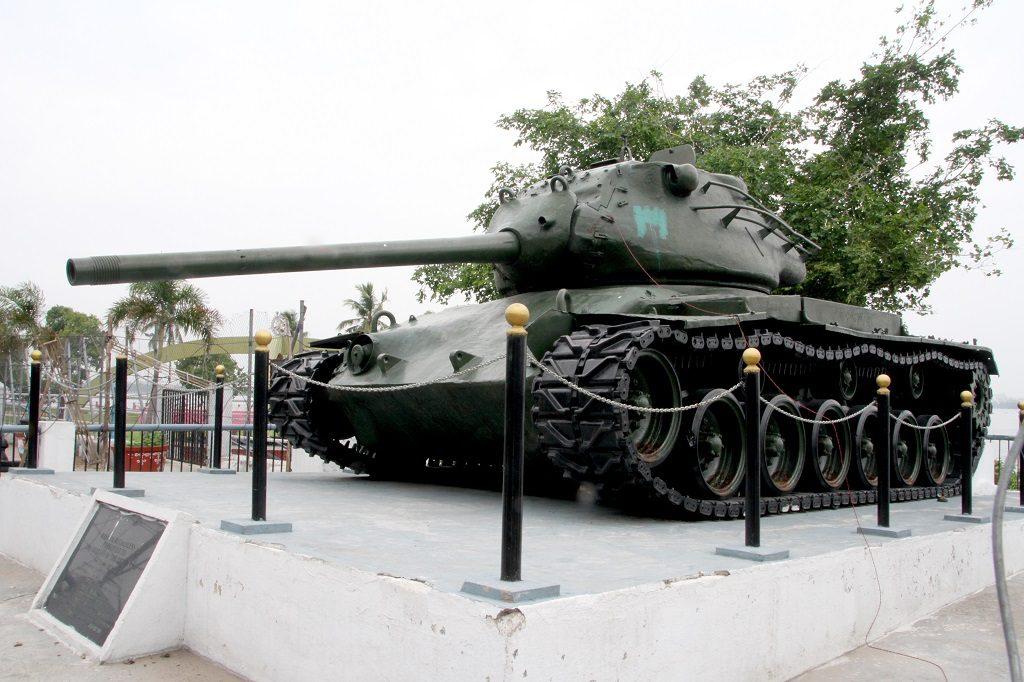
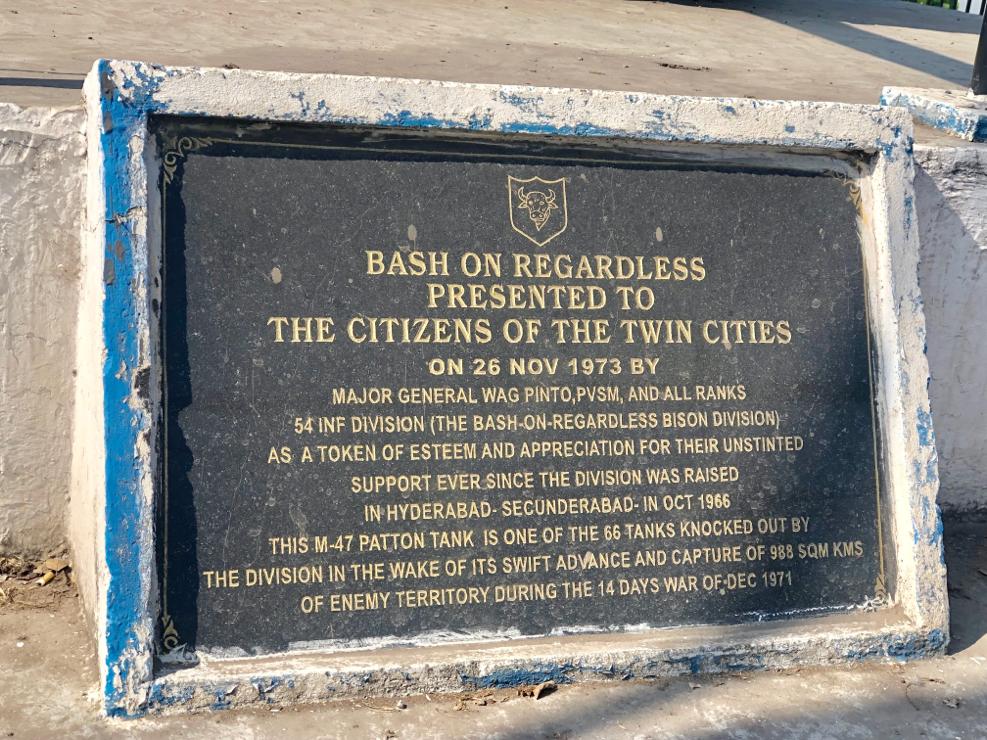
During the 1971 India-Pakistan War, the Indian Army named one of their tanks, which was celebrated for its successes against the enemy, Bash On Regardless.
En route, while crossing the Basantar River, the tank troops came under fire from Pakistani tanks as well as recoil gun nests that were still holding out. They retaliated fiercely — destroying tanks, capturing gun nests and over-running enemy defences.
During these ferocious skirmishes, one of the tank troops were hit and the commander killed on spot. This left Arun and his tank troops all alone in the combat zone with a squadron of 14 Pakistani Patton tanks approaching them.
Outnumbered but undeterred, the gutsy 21-year-old led a daring and highly skilled counter-attack. His Famagusta JX 202 (named after a township in East Cyprus where the Poona Horse was stationed in the late 1940s) single-handedly destroyed five of the enemy tanks before both the tank and Arun were hit by a shell. As he was grievously injured and his tank was aflame, Arun was asked by his superior to withdraw but the young officer with barely six months of service refused to budge ’till his gun would fire.’
The gallant officer sent a message to his Commander — “No Sir, I will not abandon my tank. My gun is still working and I will get these guys” — before switching off his transmitter (so that he did not receive any further orders to evacuate his tank) and continuing his relentless pursuit of the enemy.Pakistan lost a staggering 48 Patton tanks in the epic battle that took place in its own territory, completely wiping out its 8 (Independent) Armoured Brigade. In fact, by the end of the war, India’s Black Arrow Brigade (comprising the Poona Horse and Hodson’s Horse regiments) had won 79 gallantry awards to become the most highly decorated formation of the Indian Army!
https://www.thebetterindia.com/124098/battle-of-basantar-arun-khetarpal-param-vir-chakra-indian-army/