
THE ANTI-LOS ANGELES THE WORLD NEEDS TO PRESERVE
Every visit to Kolkata leaves me with unformed thoughts and an inability to decide if I’m enjoying myself or just putting up with it.
The city is so heartbreakingly charming. So much depreciation, so much decay and diminishing of the city, the people, the purpose. And yet. And yet there is so much dignity left in the rubble. So much pride. So much self-awareness in the ruin.
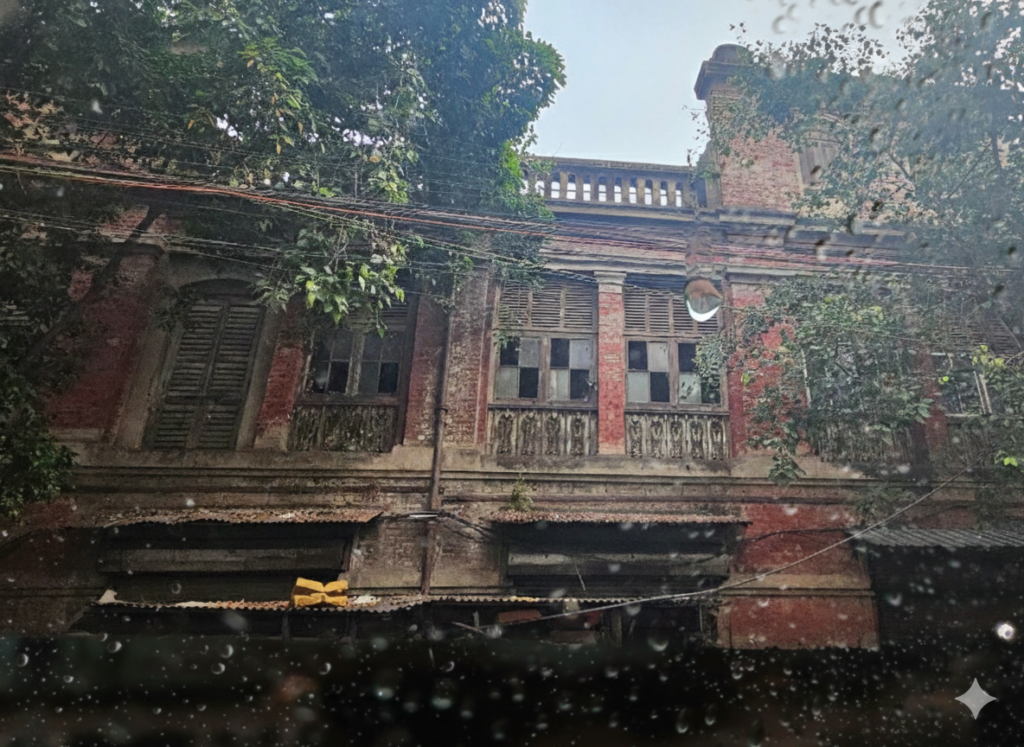
It is a city that knows it used to be great. More importantly, it knows that its greatness was not contingent on the vagaries of history, not on the accidents of empire or the whims of bureaucratic capital relocation.
The greatness was intrinsic. It had always been there.
Calcutta, as it was, as it insisted on being called in the minds of those who loved it, was not great because the British made it their crown jewel or because the Bengal Renaissance poured ideas into the streets like monsoon water. It was great because something in the very soil of it, in the texture of the air above the Hooghly at dusk, in the cadence of its people’s speech, demanded greatness and received it.
Another person, sixty years ago, ended with similar dichotomous thoughts on a backdrop of a similar respectful fascination.
Allen Ginsberg reminisced on his deathbed poem of things he will never get to do anymore:
“…enter to have Chai with older Sunil & Young coffeeshop poets,
Tie my head on a block in the Chinatown opium den, pass by Moslem
Hotel, its rooftop Tinsmith Street Chouduri Chowk Nimtallah
Burning ground nor smoke ganja on the Hooghly…”
Allen Ginsberg, Things I’ll Not Do (Nostalgias)
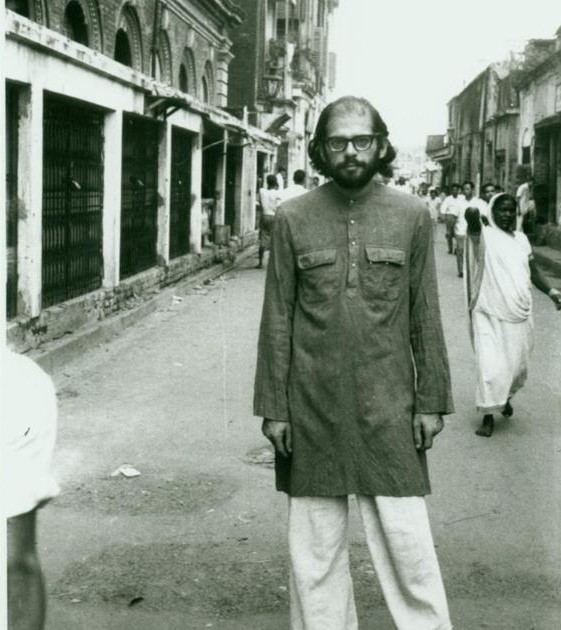
Ginsberg came here looking for dissolution and found something stranger. He found a city that had already dissolved and reconstituted itself, again, and was perfectly at ease with that. He sat in Calcutta’s trams and felt the human heat and wrote it down, because what else do you do when a city is that nakedly alive in your hands. He was looking for the edge of the Western self. Calcutta had long since stopped caring about Western selves. It had edges enough of its own.
The thing that undoes you about Kolkata is the dignity. Not the aggressive, exhausting dignity of Mumbai, which is really ambition in a dinner jacket. Kolkata’s dignity is quieter and more devastating. It is the dignity of a person who was once extraordinary and knows it and has made peace with the fact that the world has moved on and does not care. That peace is not resignation. Don’t mistake it for that. It is something harder to achieve and harder to describe. It is the peace of a city that has located its own worth entirely inside itself, in its coffeehouses and its adda, in its evening arguments about Tagore and football and politics that trail into the humidity past midnight.
Most cities are performing for someone. Mumbai performs for capital. Delhi performs for power. Bangalore performs for the global tech imagination. Kolkata performs for no one. It stopped auditioning a long time ago, if it ever started. That refusal reads as decay to people passing through, people who confuse relevance with vitality. But look closer. The decay is real and the beauty inside the decay is real and both things are true at once, which is something only very mature cities and very old souls can manage.
“…On Jessore road Mother wept at my knees
Bengali tongue cried mister Please
Identity card torn up on the floor
Husband still waits at the camp office door…”
Allen Ginsberg, September on Jessore Road, 1971
Ginsberg wrote September on Jessore Road after the Bangladesh war, watching refugees pour across the border into West Bengal, into Kolkata’s overstretched arms. The city absorbed them. Of course it did. It has been absorbing trauma for centuries, taking in the dispossessed and the displaced and the desperate, not because it has resources to spare but because absorption is what it does. That is its oldest reflex. Mercy before infrastructure. People before planning. It is a chaotic and irrational way to run a city, and it has produced, over time, the most densely, furiously human place on earth.
Kolkata doesn’t care if it’s not relevant in the engines of modern paradigms. It has provided for its own and that’s enough for it. This is a genuinely radical position in 2026, when every city is scrambling to rebrand, to attract investment, to become a hub, a node, a corridor. Kolkata watches this scramble with something close to amusement. It tried the modernity project. The project tried it. They were not compatible.
There is a particular quality to its light in winter. Something pellucid and forgiving about the low-angle sun that softens the crumbling plaster on the old buildings off Park Street and makes the moss on the walls look intentional, like design. The broken things look broken and also, somehow, finished. As if the entropy was always part of the plan. As if decay is just another word for time doing its patient, thorough work.
What Kolkata has that no other city has managed to keep in quite the same measure is the sense that interiority matters. That the life of the mind is a legitimate way to spend your life. The adda, that untranslatable Bengali institution, the long unstructured conversation that goes nowhere and produces nothing quantifiable, is not a pastime in Kolkata. It is a discipline. A practice. The coffeehouse at College Street has been hosting arguments about literature and God and politics since 1942, and the arguments have not resolved, and they are not supposed to resolve, and everyone involved knows this, and they keep coming back anyway. This is a city that found a form for the unresolvable and called it culture.
The rest of the world has decided that conversations should have outcomes. Kolkata disagrees. The rest of the world has decided that cities should grow, always grow, faster and taller and cleaner. Kolkata disagrees with that too. It has been disagreeing with the rest of the world for a long time now and the rest of the world has mostly moved on, which suits Kolkata fine.
Its greatness was not a put-on dominance. It was a state of being. That state persists, quieter now, more internal, less visible to the outside eye but no less real for that. Kolkata doesn’t need to be something to everybody. It just needs to be enough to itself.
And it is. It always has been. That’s the whole point of it.